The Chicken Business
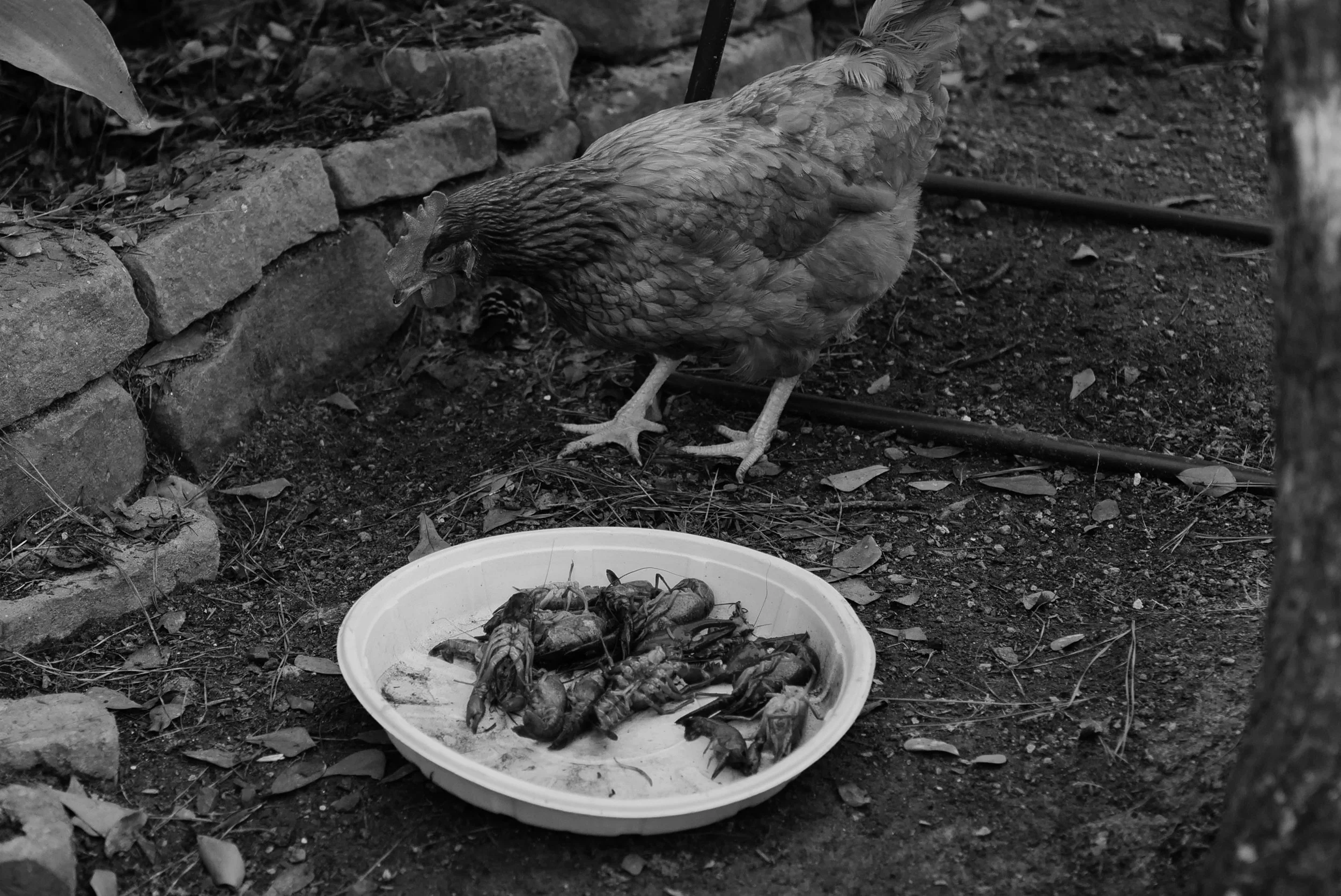
It is not until you raise chickens that you gain a real understanding of egg production. The same can be said of self-employment, you don't know what it’s like to hustle to feed your family until you have to. But in business as with raising chickens, you cannot feed your family with just one chicken, nor can you sustain a business with just one client. Let me tell you a story about how I got into the chicken game.
The chicken-and-egg paradox asks what comes first, the chicken or the egg. Once the decision to own chickens is made, the means by which you acquire them becomes critical. I did what any logical man would do—I went to a feed store to get chicks.
In a large trough filled with all kinds of chickens, I made my selection. I chose three, then went home to begin the process of raising them. As I watched them grow, I began to notice one of the three getting quite tall. We did some internet searches to determine whether we had a rooster, but convinced ourselves it was simply a dominant hen. Confirmation bias can be a trickster.
I decided to get a second opinion on my flock, so I asked one of my painters who raises fighting chickens. His advice on sexing chickens was straightforward and simple. Pick the chicken up by the beak with the tips of your fingers—imagine picking up a single peanut. That is the level of dexterity required to perform the test. If the chicken flops around erratically, it is a rooster. If it hangs limp, it is a hen.
I performed the test, and all of my chickens passed with flying colors. I had three hens. Soon enough, we would be harvesting eggs.
It was not until a month later, when I heard the larger bird crow, that I was shaken from my delusion and realized I now had a problem to deal with. HOAs do not view crowing roosters too kindly.
What now? I wondered.
My wife was still in denial until she heard the rooster crow for herself. She was heartbroken. I went back to the feed store to see what could be done. The owner pointed to the sign that said straight run. In layman’s terms: buyer beware.
We struck a deal, and I was back in the chicken game—this time with three hens.
Egg production was the goal. We are not heathens who eat our chickens; we go to Whole Foods for that.
The first year of production was spotty at best: one egg per day, sometimes two. Shabbat was the name we gave the days when no eggs were laid. The girls were always taking a Shabbat.
That first year of raising chickens was interesting. There is no doubt we had some of the most organic, healthiest eggs possible.
Tangent story, but relevant.
If you have softened water, do not fill metal chicken water dispensers with it.
We found that out when my wife went in for her yearly checkup and her blood test revealed extremely high iron content. We stopped cooking in cast iron. We stopped using carbon steel knives. If it was made of iron, it was sidelined.
One day, while refilling the chicken water, I noticed the container was heavily rusted. Lightbulb moment.
My wife eats one to two eggs per day, and the chickens’ only source of water rusted over daily. Mystery solved. BPA-free plastic water containers via Amazon Prime to the rescue.
Egg production matters. One to two eggs a day is enough for one person, but it will not sustain a family.
Spring of year two came, and it was back to the feed store. This time, however, I only picked from the troughs labeled pullets.
Did you know that sexing chickens is still a task performed by hand? An expert chicken sexer can sort thousands of chicks per day. Can you imagine squeezing baby chicks and staring at their backsides as your career?
This chicken purchase trip was very successful. The sign said, minimum of four chicks. Jackpot.
Now we would have some eggs. Seven chickens could yield up to six eggs per day.
Integration is not easy.
I remember reading that the majority of mergers and acquisitions fall short of their anticipated value creation because of integration issues. Chickens and pecking order—oh, it is a real thing.
The pecking-order fiasco caused so much stress with my wife that I had to build a second coop: one for the OGs and one for the little girls. Full integration took every bit of six months. It was like watching The Hunger Games.
But like Nietzsche stated so eloquently, that which does not kill us makes us stronger.
We lost two chickens this year—the two we picked up from the feed mill during the rooster swap.
It really sucks to lose a pet. I had grown fond of the chickens. They are incredibly smart. They recognize your voice. They let you hold them.
It was tough to bury them in the flower garden.
But like most things in life, you do not know what you do not know, and we learn best when we fail. Perhaps I should apply more chicken logic to some of my business practices.
Business tangent: I am sure there is an ideal number of clients that every business strives for.
Zero sucks.
Too many brings its own issues.
But the hardest position is having one major client and a sprinkling of smaller ones.
Michael Porter was spot on when he said that the bargaining power of buyers is one of the five major forces that shape strategy. The power dynamic of a relationship can shift quickly and unexpectedly. Like raising chickens for sustenance , you cannot rely on only one producing eggs.
The business cycle can be harsh. It is designed to cull the flock, figuratively speaking.
I once asked the CEO of an oil and gas service company why the industry had such volatility. His answer surprised me.
When times are good, everyone is making money hand over fist, all running full steam into a wall (the inevitable commodity price correction). It is only the biggest companies that can get back up after hitting the wall.
I think the same logic applies in construction.
I have hit quite a few walls in my nine years at this game. I have made money, lost money, gained clients, lost clients.
Through all of the cycles nine years can bring, I have built resilience.
It would be easy for me to become hardened and cynical, to change into an automaton whose only purpose is to get more clients and make more money.
But in business, like raising chickens, there are basic rules.
Now I will tie everything together with a ribbon.
Flock size, like customer size, depends on the amount of space and time that you have.
There is a lot that goes into determining the right-sized flock. One chicken is not enough, and one hundred is too much for one person to care for alone.
In three years of poultry raising, I know there is an ideal number. For us, it is five hens. It falls just below Texas SB141, which allows up to six chickens at a single-family residential lot.
In business, three to five large customers is ideal.
Or, I could just start my own developments and stop worrying about chasing work. Now where did I put that $3.5 million dollars?
With one chicken, as with one customer, the whole thing could disappear—especially if you do not know the warning signs.
When chickens stop being social, that is usually a good indicator something is wrong. It is important to keep tabs on your flock. Watch for loss of appetite and feather loss. Those are signs death may be near your door.
There are signs in business that the “chicken” is dying as well.
If you are paying attention, you will feel it in your gut.
Back to the feed store to get another client, I mean chicken.
